I ran toward the sun, I ran to be happy, I ran against the grief, 
I ran to forget, I ran against my anger, I ran for my life. 
Every day.

I was. When I ran, there was no time: there was only my body, my breath,
the trees and hills and sky, the birds and chipmunks and squirrels, the cold
or hot and cool air, the rain on my hat and face, the white and silent
motions of snow. The rhythm of running and deep breathing soothed mysoul,
the landscapes and weather thrilled it.  I always felt grateful, but I
did not know it was gratitude, and so I never thanked God, or the leaves,
or air, or my legs. 

Up until that September morning.
The world turned around itself once, 
and with it my leg.  
It didn’t run anymore.
My life stood still.
Without running, I didn’t exist.

Four years ago I had a bike accident.
My right ankle was shattered into thousands of pieces.

Eight years ago, a car hit me. In September the surgeon cut off my left leg.

I mourn this, and I sing in gratitude for loving this,
and in gratitude for all the roads I ran on,
for the hills I climbed and descended, for trees and grass and sky,
and for being spared losing running sooner than I did:
ten years sooner, or eight seasons, or three; or one day.

Now I ride my bike and experience life in a different way.

Time to accept life in a wheelchair. Some days in fall and spring, I push
myself around the church parking lot... my chair I sing with him, and
shadowbox and dance.


Andre Dubus
A country road song. Mediations from a movable chair.

Dorothee Deiss
Why would anyone live on this earth and not run on it? 


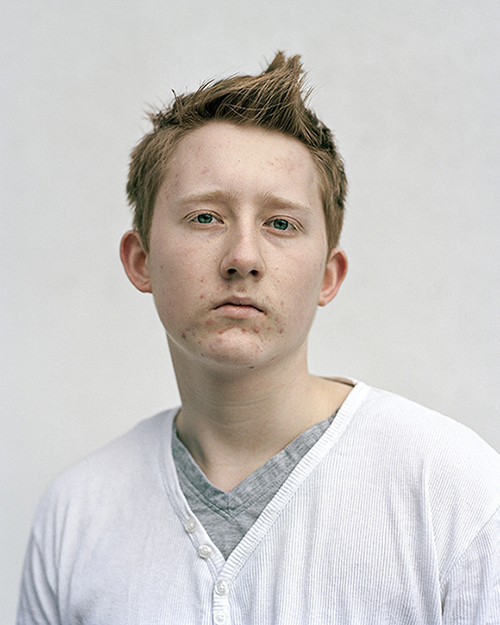
Portraits, Summer 2010, New York, USA


160 kilometers of what once was the strip of cleared land on which the wall stood and which marked the zone subject to a shooting order surround Berlin and run through the city. 20 years after the fall of the wall there are few traces of what had such a profound impact on the lives of so many people. How the construction of the wall tore apart families in the course of a single day, how in the following years a common culture developed into a socialist and a capitalist world, how close hope and despair lay in attempts to overcome the wall.

The historical border strip can be navigated on an almost continuous bike path. In the course of a year I have ridden each section countless times. The photographs taken there are all from the former border zone or its immediate vicinity. Quotes from witnesses draw connections between the images and daily life next to the death sector before and after the fall of the wall.


"It is terrible and wonderful at the same time how fast life lets grass grow over history. But the scars remain."


Across the River" is a project of German and Polish photography students who examined the changes, dreams, and realities in the border area between Germany and Poland over a period of one year. The 16 photographers depict the living conditions and circumstances in a region at the periphery of two countries from a very personal point of view.


Since 2005 and ongoing, USA.


During the four weeks of the world cup 2006, Berlin was a unique, fantastic festival, where all borders between different people, mentalities and nationalities seemed to be forgotten and everybody celebrated together one overwhelming party.<br />However, the sceneries aside from the field were often more attractive and interesting.


December 2008, Zimbabwe.


It`s about a typical American summer camp where the kids and teens have a lot of fun with outdoor activities, campfire programs and making friends. The only distinctive feature is that all of them have diabetes.


January / February 2007, Poland.


Barack Obama visits Berlin in the Summer of 2008, Berlin.


What kind of people build themselves a tiny substitute home in or just outside of their home town? What drives them to spend many months of the year living on their allotments of land or as long term guests at a camping ground at the edge of their town? Who decides to go to the extreme of even spending the winter in a camper instead of in the Berlin apartment only a few kilometres away? These people have construed themselves their own little substitute homes, warm nests from which they venture out into daily life.


I have always been fascinated with the concept of home. The feeling of having roots in a place has something that is close to the earth, steadfast to storms, unable to be moved.I experienced how very different people and their mentalities were according to the individual camping sites and garden colonies. On some sites one found total conformity, on others individuality was desired, East or West Berlin made no difference. I heard the stories of lives through which I understood this feeling of home and the many decades bound to the hut or camper.


Fashion.